
by M∴ Dionysius Rogers1
Do what thou wilt shall be the whole of the Law.
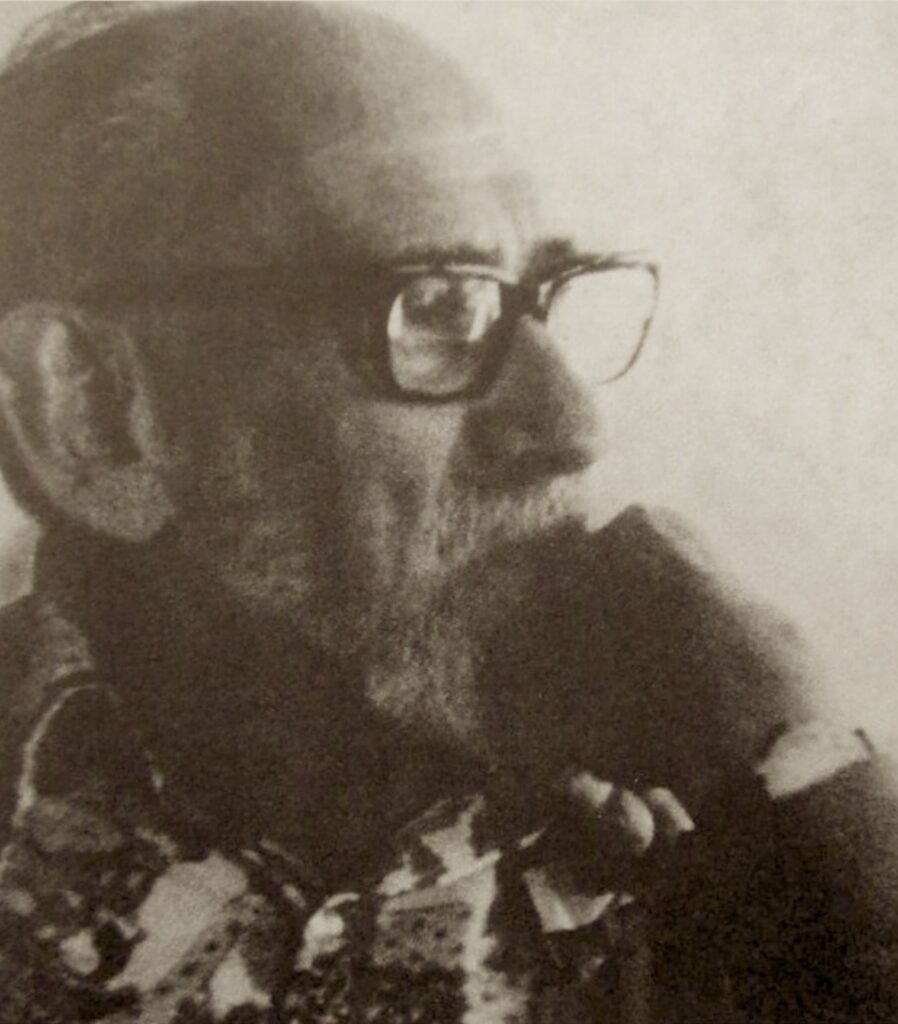
Israel Regardie (1907—1985) was born in England to Jewish parents who had emigrated from Russia, and the family relocated to the United States during his childhood. He grew up in Washington D.C., and he took his first interest in esoteric subjects after encountering references to Theosophy in his older sister’s health and diet reading. Regardie was quickly attracted to the occult cabala, and he later cited as the books informing his earliest study in this field Q.B.L. by Charles Stansfeld Jones and An Introduction to the Tarot by Paul Foster Case. While still a teenager, Regardie was admitted to the Societas Rosicruciana in America and advanced to Zelator in that group. His research brought him to an appreciation of the published work of Aleister Crowley, and in pursuit of more such books he entered into communication with Karl Germer in New York.
On Germer’s recommendation, Crowley enlisted Regardie as his personal secretary, a post in which the remarkably young man served for several years beginning in the late 1920s in Paris. In this role, Regardie convinced Crowley of his personal loyalty to the extent that he was entrusted with management of Crowley’s interests in England while Crowley was in Berlin. Regardie succeeded Gerald Yorke as Crowley’s agent with his power of attorney during this period. Crowley gave Regardie the IX° of Ordo Templi Orientis and at least admitted him as a Neophyte of A∴A∴, thus giving him initiated connections to the organized forms of Thelema. While working directly with Crowley, Regardie used the mantonym Nechesh, and the Beast referred to his secretary as “the Serpent.” In correspondence, Crowley also called Regardie Frater Scorpio.
While living in England in the 1930s Regardie wrote his own most durable contributions to occult literature. His first two books A Garden of Pomegranates and The Tree of Life were both dedicated to Crowley, although pseudonymously so. The first was to Ankh-f-n-khonsu, the Priest of the Princes, and the second to Marsyas. Implicitly identifying himself with Marsyas’ pupil Olympas, Regardie leavened the latter dedication with “poignant memory of what might have been.” In this book, he quoted Crowley approvingly with respect to the value of the Pentagram ritual; and when Regardie sought to illustrate a setting for the ceremony for the invocation of the Holy Guardian Angel, he did so by quoting twenty lines of verse from Crowley’s AHA.2 Thelemic rhetoric welled up in Regardie’s remarks that “man can never … understand by the mind alone that he is an eternal spiritual entity, a brilliant star shining by the light of its own essence within the bespangled body of Nuit, the Queen of Infinite Space.”3 Regardie’s third book The Middle Pillar was written in light of his experiences in the Golden Dawn successor organization Stella Matutina, and the dedicatees were Westcott and Mathers. In this book he expressed a sort of removed approval for “one system nowadays” which “conceives of the Great Work as the partaking of the recognition of the Crowned and Conquering Child Horus.”4
After his initiation in the Stella Matutina, Regardie wrote the memoir-history book My Rosicrucian Adventure. In the first chapter, he called Crowley an “extraordinary man of genius” who had written and published “highly important” texts. But he also disparaged Crowley for “leading a foolishly dissipated life.” Regardie rejected claims that Crowley had overstated his own past grade of initiation in the Golden Dawn, and praised Crowley’s writings on yoga. But he characterized as “badly mauled” the Golden Dawn materials Crowley had issued through The Equinox, and he impugned Crowley’s motives for the “unnecessary tampering” that the texts were alleged to have suffered. Regardie wrote, “Perhaps his aim was to eliminate important parts of the rites and practical work so that interested people, realizing more information was required, would communicate with him for further guidance, thus enabling him to consolidate his position as a leader, and formulate an active Order.”5 This accusation betrayed ressentiment in a discernibly autobiographical subtext–written as it was by one who had communicated with Crowley for further guidance and submitted to his leadership.
Regardie returned to the United States in 1937, and subsequently sent a copy of My Rosicrucian Adventure to Crowley. The Beast took it as an attack and replied with a missive that included anti-semitic slurs and mocked Regardie’s recently-adopted name Francis. The two men remained estranged until after Crowley’s death in 1947. Regardie meanwhile published his four-volume exposure of Stella Matutina materials under the title The Golden Dawn. My Rosicrucian Adventure had been written to serve as an introduction to these, and his criticisms of Crowley and the Golden Dawn texts from The Equinox were likely intended to justify this new exposure of similar materials. Regardie claimed that his Golden Dawn books were to rescue a tradition from its capsizing organizational vehicle. But he quite arguably finished the work that Crowley had begun when the older man claimed to have “destroyed the Order” in part through the Equinox publication of their grade rituals. Neither the Stella Matutina, nor the Mathers’ Alpha et Omega, nor Waite’s Fellowship, nor any other putative Golden Dawn authority was able to sanction multiple temples by the end of the 1930s.
Once these books were completed, Regardie’s literary output began to dry up. Pursuing an interest in psychology that had begun in England, he earned a degree from the Chiropractic College of New York. After wartime service in the US Army, he developed his therapeutic practice, and beginning in 1947 this practice was increasingly an application of the techniques and ideas of Wilhelm Reich, with whom he “had a number of personal communications.”6 In later years he would come to identify Reichian therapy with yoga.
After Crowley’s death, Regardie was pretty much absent from the occultist world, writing no new books, and with no attachment to any groups throughout the 1950s. He was living in Los Angeles and observing the Rosicrucian Rule to engage in the profession of a healer and to conform to the customs of the country of his residence. Crowley’s successor Karl Germer mentioned in 1949 that he had never read any of Regardie’s books, and a 1952 letter by Germer referred to Regardie as a former Thelemite.7 Helen Parsons-Smith recounted having met Regardie at a garden party in the mid-1950s, but said she had disliked his aura and that she had been “steered away from him” by her husband “all afternoon.”8
In the early 1960s, two different factors reactivated Regardie. The first of these consisted of the books about Crowley written by his exploitative literary executor John Symonds. The Great Beast was a full-length biography published in 1951, and it was followed in 1958 by a supplement The Magic of Aleister Crowley. But the two books seem to have taken a little while to reach Regardie’s hands. To quote Regardie: “The Great Beast … is a malicious, contemptible piece of work crammed with deliberate misinterpretation and ignorant misunderstanding of what Crowley stood for.” And “In [the] second book, Symonds has extrapolated from the diaries and other works by Crowley in such a contemptible manner as to make ‘the old man’ look like a complete idiot.”9 In 1964, Regardie started drafting The Eye in the Triangle. Almost two decades later he wrote retrospectively that this book “was really an answer to Symonds’ wretched vilification of Crowley. It succeeded in dragging me out of a decade of literary silence and unproductivity.”10
The second incentive to Regardie came from Texas. Carr P. Collins Jr. was a Vice-President of Fidelity Union Life Insurance Co, a business started by his father, a noted business magnate and philanthropist. Collins Jr. was himself a wide-ranging businessman, and also an organizer of a “philosophy study group” in Dallas, consisting of a few dozen esoterically-curious people with some experience in such topics as AMORC, Edgar Cayce, and Theosophy. They had been studying Regardie’s books on magic with special interest in the qabalah. Collins wrote to Regardie in Los Angeles, inquiring if the author would be willing to make some audio recordings as an aid to students of his work. As their dialogue progressed, Regardie agreed to come to Dallas and to provide a seminar to the group in person. This trip happened in the first half of 1964, and Regardie later wrote to one of the attendees, “When I came back from teaching you, it apparently started off my creativity once more,” and that he had drafted the first third of his Crowley biography with hopes of completing it by the end of the year.11
Regardie enlisted the help of Carr Collins in his new push to find publishers for Crowley reprints along with the anticipated biography. Collins was immediately helpful, proposing networking ideas, and contacting both Weiser and University Books on Regardie’s behalf. But he was also concerned for Regardie’s reputation, and expressed worries that Regardie could be “tainted” by any identification with Crowley. Regardie was in no way deterred and forged ahead.
Weiser issued a new edition of Regardie’s Tree of Life, and in the introduction to that book, he was plainer than ever about his debts to Crowley, writing, “To [Crowley’s] ultimate vindication from the idiocy of biographers and muckraking journalists I have dedicated many years of my life. His material will never die, it will remain an inspiration to students of the distant future as it has to me.”12 In fact, he continued the work of that vindication even before the biography could be brought to press by providing an introduction for the Llewellyn Publications reissue of a book which Regardie had also helped to bring out from Mandrake Press in 1930. P. R. Stephensen’s Legend of Aleister Crowley was thus able to appear In a vanguard position just ahead of the US release of Crowley’s Confessions as well as in advance of Regardie’s own The Eye in the Triangle.
Around this time, Collins created the Sangreal Foundation, an educational non-profit capitalized through Fidelity Union Life Insurance Company common stock. This arrangement allowed him more efficiently to fund Dallas visits from Regardie and other presenters such as Alan Watts, Albert “Rudi” Rudolf, and William G. Gray. The Foundation also provided for the printing of some esoteric books which were then distributed through Llewellyn or other occult publishers. Although Regardie at first resisted this publishing subsidy, he ultimately edited a number of Crowley books that were produced through Sangreal. With encouragement from Gerald Yorke in England, Sangreal produced Regardie’s editions of Eight Lectures on Yoga, Book Four (parts 1 & 2), The Holy Books, AHA, and The Vision & the Voice. These were hardcovers issued in short print runs of several hundred copies.
In January 1968 Regardie circulated a completed manuscript of The Eye in the Triangle to Collins, who was enthusiastic about it. Collins gave it a thorough editorial review, and shopped it to Weiser for publication. But it wasn’t until 1970 that the book was finally published by Llewellyn. It became a standard biography of Crowley for a generation, competing with Symonds’ The Great Beast, as it was intended to do, and eclipsing minor fare like the writings by Daniel P. Mannix and Gilbert Highet, both of whom Regardie criticized. It has influenced both popular and scholarly views of Crowley and Thelema. The book was read by Alan Watts, who recommended it to Robert Anton Wilson. Wilson went on to devour Crowley’s own writings and to become a notable advocate himself for Crowley’s magick, developing his own distinctive reading of the Law of Thelema.13 When The Eye in the Triangle was republished by Falcon Press in 1982, Wilson provided a new introduction.
More recent writers such as historian Alex Owen have taken from The Eye in the Triangle a view that Crowley ultimately failed in his attainment.14 Regardie wrote, “[Crowley’s] major years of productivity were gone within a few years of that ordeal in Algeria. It is my considered belief that he might just as well have died around 1914 and prepared for his next incarnation. … It is certain that almost all of Crowley’s finest creative work was executed before the year 1914. From then on, with only a few minor exceptions, he marked time.”15 But by the end of that same chapter, Regardie had offered to “balance” the condemnation by allowing that Crowley “may well be … a far greater mystic and a wiser philosopher than either he or we could know”; and that he “may well be … the prophet of the new Age,” while flatly declaring that Crowley was “above all an apostle of a new kind of consciousness–the awareness that evidently belongs to a future time.”16 And then a few pages later, feeling the courage of his convictions, Regardie wrote of Crowley: “Actually, he did herald the New Age, the future age where men will be self-determining, functioning in terms of the laws that Crowley came to state as Thelema.”17 While still in tension with the dead man Aleister Crowley, Regardie had accepted the Prophet of the Law.
The final chapter of The Eye in the Triangle is not about Aleister Crowley. It is about the Law of Thelema. When Regardie writes that the Law of Thelema “means self-regulation and autonomy on all levels,”18 it is praise consistent with his highest ideals as a Reichian therapist. On the final page, here is Regardie’s verdict:
It really makes little difference in the long run whether The Book of the Law was dictated by a preterhuman intelligence named Aiwass or whether it stemmed from the creative deeps of Aleister Crowley. The book was written. And he became the mouthpiece for the Zeitgeist, accurately expressing the intrinsic nature of our time as no one else has done to date. 19
While it seems that there was no communication between Regardie and O.T.O. Chief Karl Germer after Crowley’s death, Regardie did have extensive and friendly relations with Germer’s eventual successor Grady McMurtry. In 1969, Carr Collins informed Don Weiser “Grady L. McMurtry … is the chief potentate of O.T.O.” doubtless on Regardie’s testimony.20 When Regardie had lost his occult library to burglary, Grady assisted in trying to recover it, and in supplying replacement volumes.21
At the end of the 1960s Regardie put in a great deal of effort to edit and introduce many of Crowley’s works that then came off presses over the next half decade. Perhaps the last of these was Gems from the Equinox published by Llewellyn in 1974. At the end of its preface he wrote, “I pray the Gods will now release me from the preoccupation of presenting the work of Aleister Crowley that has lain heavily on me for so long a period of time. With the publication of this book, my obligation to him, whatever it was, is surely fulfilled.”22
But Thelema was not a personal obligation to Crowley, and those who met Regardie in his later life often testified to his use of Thelemic salutations.23 He continued his friendships among key Thelemic organizers and formed new ones. He met Jim Wasserman in early 1977 after prior correspondence, at a point just after Wasserman’s break with Marcelo Motta, when he was a somewhat disaffected O.T.O. Minerval. Wasserman later wrote, “He told me he had accepted the fact that he was a Thelemite, and that his personal relationship with Crowley had long colored his view of Thelema, to his detriment.”24 Lon DuQuette has claimed Regardie as “one of [his] earliest and most influential magical mentors” who was also friendly and generous to the O.T.O. lodge that DuQuette organized.25
In the 1970s, Regardie had a pupil in Reichian therapy named Alan Miller. Miller went on to found Falcon Press, where he wrote as “Christopher S. Hyatt.” Regardie and Miller brought out new editions of The Eye in the Triangle and Gems from the Equinox, along with most of the Crowley titles that had been published through Llewellyn. The 1983 Falcon Press edition of The Legend of Aleister Crowley was dedicated by Regardie to “my good friend Grady McMurtry, Caliph of the O.T.O.”
Regardie’s editions of Crowley’s works have been substantially eclipsed by the superior editions authorized by O.T.O. in subsequent years. But they were key resources for the Thelemites of the occult revival of the later twentieth century and the era in which O.T.O. was renewed from its prior dormancy, and in his later life Regardie was justifiably viewed as an authority on Thelema. A man named Tom Whitmore consulted Regardie in 1984 concerning the proper disposition of the original manuscript of Crowley’s Book of the Law, when it had been discovered in the basement of an Oakland house he had purchased. Regardie directed Whitmore to Grady McMurtry as the legitimate representative of O.T.O.26
Regardie’s last major work was The Complete Golden Dawn System of Magic, a book grounded in Golden Dawn papers that had come to Regardie from Gerald Yorke through Carr Collins. In a long essay on “Self Initiation” that Regardie wrote for that book, he criticized A. E. Waite for adding Christian biblical material to the Golden Dawn rituals in his Fellowship of the Rosy Cross, and then Regardie expressed a strong preference for Crowley’s “Holy Books … They convey more devotion and love to me than almost anything else.”27
Much has been made in some quarters of a statement by neo-Golden Dawn organizer and author Patrick Zalewski, first published in 1988–three years after Regardie’s death. Zalewski alleged,
One of [Regardie’s] pet hates was people associating him with Crowley’s brand of Thelemic Magic, and the Book of the Law. The latter case was a stumbling block for him, as he was convinced this was nothing more than a product of Crowley’s subconscious…I can still recall him thumping the table at dinner one night saying: ‘Dammit, I am a Golden Dawn man and not a Thelemite, and I wish people would realize it.’
There are ample grounds for skepticism about Zalewski’s claims in this case, and even Zalewski conceded at the same time that, “[Regardie] did, however, hold a lot of respect for McMurtry and some of the abilities of the O.T.O.” 28
The imputed conflict for Regardie’s loyalty between Thelema and the Golden Dawn is entirely belied by two categorical quotes. The first is from The Eye in the Triangle:
This elaborate Golden Dawn system became part of Crowley’s own inner world … He carried it further than even the Golden Dawn principals had envisaged. I know of nothing within the Order documentary that even hints at the kind of visionary and spiritual experience that Crowley managed to get out of it.29
The second quote is from an interview with Regardie during his final months. He told Alan Miller:
I cannot separate Crowley from The Golden Dawn, because Crowley was The Golden Dawn and The Golden Dawn was Crowley.30
In 1983 Regardie had written an introduction for a Falcon Press edition of Crowley’s anti-Christian playtext The World’s Tragedy. The book did not in fact see print until after Regardie’s death. The foreword by Hyatt and DuQuette in 1991 was preoccupied with what they saw as a burgeoning American Christian nationalism, which honestly pales in comparison to what confronts us today. And the words of the American Thelemite Regardie–who had in 1928 Paris transcribed this book to preserve it at the behest of its author–claimed “enormous pleasure and profound satisfaction” to be “giving back to the world a document that is as important in its own way as the Bill of Rights is to Americans.”31
For his labors in preserving the legacy of the Beast and in promulgating the Law, the United States O.T.O. has a special duty to recognize the life and work of our brother Israel Regardie.
Love is the law, love under will.
- This nomination consists substantially of a revision of the paper “Israel Regardie, American Thelemite” presented to Academia Ordo Templi Orientis in the November 2024 EV session in New Orleans. ↩︎
- Israel Regardie, The Tree of Life: A Study in Magic, 3rd rev. ed., Weiser Books (1983), 166, 187. ↩︎
- Ibid., 80. ↩︎
- Israel Regardie, The Middle Pillar, Llewellyn Publications (1971), 25. ↩︎
- Israel Regardie, What You Should Know About the Golden Dawn, New Falcon Publications (1983), 25. ↩︎
- Israel Regardie, An Interview With Israel Regardie: His Final Thoughts and Views, ed. Christopher S. Hyatt, New Falcon Publications (1984), 53-4. ↩︎
- Karl J. Germer, Selected Letters 1928-1962, ed. Shoemaker, Ferrell, Voss, Temple of the Silver Star (2017), 198, 270. ↩︎
- Martin P. Starr, The Unknown God, Teitan Press (2003), 331 n. ↩︎
- Israel Regardie, “Introduction” to P. R. Stephenson, The Legend of Aleister Crowley, New Falcon Publications (1986), vi. ↩︎
- Israel Regardie, “Introduction” to Aleister Crowley, The World’s Tragedy, New Falcon Publications (1994), vi. ↩︎
- Israel Regardie to Jeanne Coffin, 1964-7-28, O.T.O. Archives. ↩︎
- Regardie, The Tree of Life, 8. ↩︎
- Robert Anton Wilson, The Lion of Light, ed. Mike Gathers, Hilaritas Press, LLC. (2023). ↩︎
- Alex Owen, The Place of Enchantment, University Of Chicago Press (2004), 25. ↩︎
- Israel Regardie, The Eye in the Triangle, Falcon Press (1982), 445. ↩︎
- Ibid., 453. ↩︎
- Ibid., 458. ↩︎
- Ibid., 492. ↩︎
- Ibid., 507. ↩︎
- Collins to Weiser 1969-9-15, O.T.O. Archives. ↩︎
- Gerald Suster, Crowley’s Apprentice: The Life and Ideas of Israel Regardie, Weiser Books (1990), 150. ↩︎
- Israel Regardie, The Wisdom of Israel Regardie Volume I, New Falcon Publications (2018), 194. ↩︎
- E.g. Suster, Crowley’s Apprentice, 160. ↩︎
- James Wasserman, In the Center of the Fire, Ibis Press (2012), 120. ↩︎
- Lon DuQuette, “Genius Can Be Infectious,” in Regardie, Wisdom Vol. I, v. ↩︎
- Tom Whitmore, “Raiders of the Lost Basement,” Baphomet Breeze VII(3), Autumn 1992. ↩︎
- Israel Regardie, The Wisdom of Israel Regardie Volume III, New Falcon Publications (2020), 84-5. ↩︎
- Patrick Zalewski, The Secret Inner Order Rituals of the Golden Dawn, New Falcon Publications (1988), 179-80. ↩︎
- Regardie, The Eye in the Triangle, 387. ↩︎
- Regardie, Interview, 55. ↩︎
- Regardie, “Introduction” to The World’s Tragedy, x. ↩︎